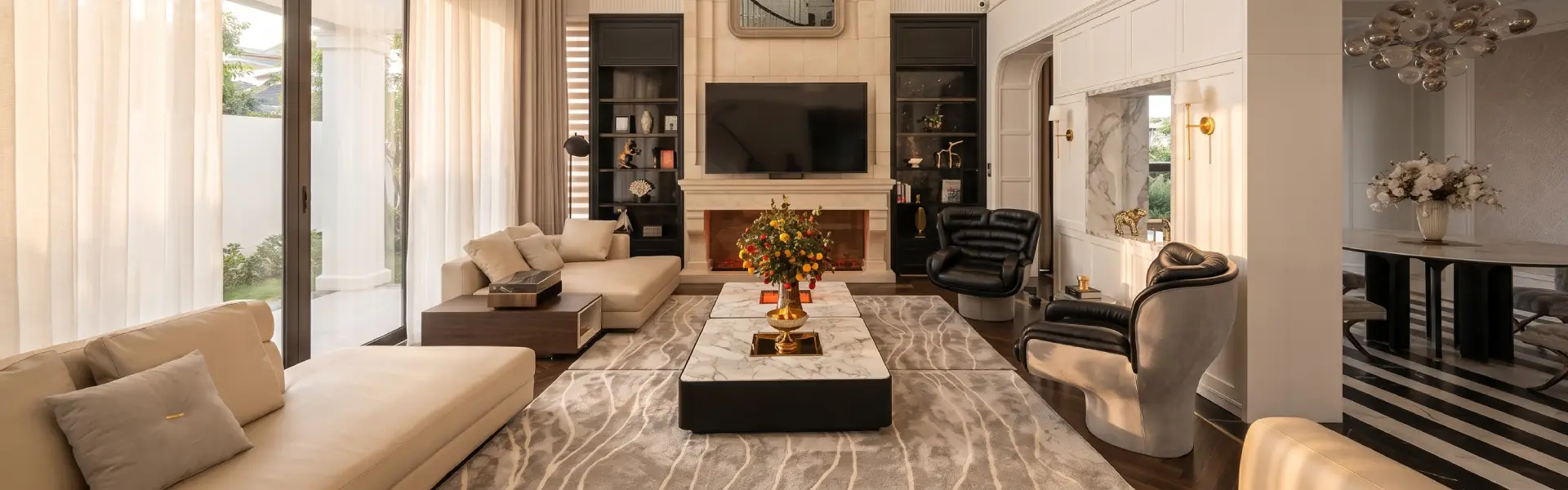

Hiring an interior designer gives you a tailor-made, optimised and functional space while keeping your budget and timeline under control. In practical terms, an interior designer plans the layout (plans, volumes, circulation, light), selects materials, coordinates the trades and supervises the worksite through to handover. You save time, you avoid costly mistakes, and you add lasting value to your home or commercial space.
An interior designer is a professional who reshapes existing spaces. Unlike a decorator, who focuses mainly on mood, colour and furniture, an interior designer rethinks the interior structure: redistributing rooms, moving non-load-bearing partitions, designing bespoke fittings and managing the works. The core benefit is turning an idea into a buildable, costed and controlled project, with a single point of contact from the first sketch to final delivery.
What exactly is an interior designer?
An interior designer is a space professional who works on the organisation, functionality and aesthetics of an existing interior, without altering the building’s load-bearing structure. They shape volumes, lighting, circulation, materials, and finishes, then act as the project manager on site.
Three roles are often confused:
- The interior designer plans and reconfigures existing spaces, manages the works and coordinates the trades. In France, the profession (architecte d’intérieur) is recognised by the CFAI (Conseil Français des Architectes d’Intérieur), which lists qualified professionals.
- The interior decorator works on atmosphere, colour, furniture and finishes, without structural reconfiguration or full worksite supervision.
- The architect (a protected title in France, registered with the Ordre des architectes) works on the structure and building envelope and signs planning applications above certain floor-area thresholds.
For any change affecting a load-bearing wall or the structure, the interior designer works alongside a structural engineer or an architect.
What are the concrete benefits of hiring an interior designer?
The value of an interior designer comes down to seven measurable benefits:
- Maximising every square metre
They reveal a space’s hidden potential, recover usable floor area, and solve circulation or storage problems you would not spot on your own. - Protecting your budget
They cost the project upfront, prioritise spending and prevent the overruns that come from poor decisions or work that has to be redone. - Saving time
They run the project, bring in the right trades and hold the schedule, freeing you from day-to-day coordination. - Access to a network of professionals
Skilled tradespeople, suppliers and bespoke furniture makers: they open the door to reliable partners, often on negotiated terms. - Avoiding costly mistakes
A poor layout or electrical or plumbing decision is expensive to correct. Designing it properly upfront removes that risk. - Coherence and quality
They bring a single overarching vision, harmony of materials and finishes, and a result that matches the investment. - Adding value to the property
A well-designed interior improves everyday comfort and raises the value of the home for resale or rental.
How much does an interior designer cost?
The cost of an interior designer depends on the scope, the floor area and the level of involvement. In France, three fee models coexist:
- A percentage of the works for a full assignment (design plus site supervision), generally between 8% and 15% of the pre-tax cost of the works.
- A fixed fee for a design-only assignment (plans, material boards, 3D visuals), set according to the project scope.
- A day rate or hourly rate for one-off consulting or light support.
Financially, an interior designer is rarely a net extra cost: savings on purchasing, negotiation with the trades, and the elimination of mistakes often offset all or part of the fees.
When should you hire an interior designer?
Hiring an interior designer makes sense as soon as a project goes beyond simple decoration. The most common situations are:
- A full renovation of an apartment or house involving several trades.
- A property purchase you want to transform before moving in, or an investment to optimise.
- A small space to exploit (studio, loft conversion, awkward layout) where every centimetre counts.
- A reconfiguration to adapt the home to a new stage of life: a growing family, working from home, reduced mobility.
- A commercial project: shop, offices, practice, hospitality or restaurant, where function and image matter as much as aesthetics.
Interior designer vs interior decorator: what is the difference?
The difference lies in the scope of work. A decorator enhances an existing space (colour, furniture, textiles, accessories) without altering its structure. An interior designer rethinks the space itself: moving non-load-bearing partitions, redrawing volumes, designing bespoke fittings and supervising the worksite.
In short: you hire a decorator to change the mood, and an interior designer to transform the space. For any project involving building work and several trades, the interior designer is the right point of contact.
For a deeper comparison of the roles, and guidance on which one your project actually needs, read our full guide: Interior Decorator vs Interior Architect vs Interior Designer: Which do you need?
How does a project with an interior designer unfold?
An interior design assignment usually follows five stages:
- First meeting and feasibility study
Analysis of the space, your needs, your lifestyle, and your budget. - Concept design
Plans, sketches, mood boards, and 3D visuals to validate the direction. - Detailed design and costing
Technical drawings, material selection, consultation of contractors and preparation of quotes. - Site supervision
Coordination of the trades, quality control, and adherence to the schedule and budget. - Handover
Final inspection, clearing of snags, and delivery of the finished space.
You can commission the full assignment or only part of it (design only, consulting, or site supervision).
Is hiring an interior designer worth it?
FAQ: the value of an interior designer
Why hire an interior designer instead of managing the project yourself?
Because they bring an overarching vision, a controlled budget, a network of reliable trades, and full coordination of the worksite. You save time, you avoid costly mistakes, and you get a professional result.
Can an interior designer knock down a wall?
They can alter non-load-bearing partitions. For a load-bearing wall, they work with a structural engineer or an architect who validates structural feasibility.
Is there a minimum floor area or budget to hire an interior designer?
No. A small, well-designed space benefits as much from their expertise as a large renovation. It is the complexity of the project, rather than its size, that justifies their involvement.
What is the difference between an interior designer and an interior decorator?
An interior designer plans and can act as project manager, reshaping the space and supervising the works. A decorator focuses on atmosphere and finishes without structural changes or worksite supervision.